
For international producers planning animation, visual effects, or post-production work outside their home market, the Thailand post-production rebate has become one of the most overlooked levers in Southeast Asian production economics. The country’s better-known cash rebate for live-action shoots draws the headlines, but the same incentive framework — administered by the Thailand Film Office (TFO) under criteria the Ministry of Tourism and Sports updates from time to time — also extends to qualifying animation, VFX, and post work performed on the ground by Thai vendors. For studios weighing where to place a CG-heavy episodic, an animated feature, or a finishing pass on a long-form documentary, the Thailand post-production rebate changes the budget conversation.
This guide is for line producers, post supervisors, VFX producers, and finance leads who are pricing Thailand against rival post-production hubs in Asia and Europe. We cover what the rebate covers, what work qualifies, how spend is captured, and what international clients can realistically expect from a Bangkok-based production partner managing the application end-to-end. For the full live-action framework, see our Thailand film incentive 2026 guide.
Why the Thailand post-production rebate matters now
Two structural shifts have pushed the Thailand post-production rebate up the agenda for international producers. The first is the maturation of Bangkok’s post and animation ecosystem. Animation studios, VFX houses, sound facilities, and finishing labs in Thailand now service global streamers, commercials groups, and feature production companies on a routine basis — not as a low-cost fallback but as a primary vendor choice. The second is the regional competition. Other Southeast Asian and Asia-Pacific jurisdictions have layered their own rebates and grants. Thailand’s response has been to broaden eligibility, simplify documentation, and integrate post-production work into the same framework used for principal photography rebates.
For a producer holding a budget where a meaningful percentage will be spent on animation, VFX, audio post, or finishing, the Thailand post-production rebate is not a marginal saving. It is one of the inputs that determines whether a project is greenlit at the budget the financiers signed off on, or whether a chunk of work has to be re-tendered in a more expensive market.
What the Thailand post-production rebate actually covers
The Thailand post-production rebate sits inside the same cash-rebate scheme TFO administers for foreign productions. The rebate is calculated as a percentage of qualifying Thai spend, applied after the production completes its work and submits an audited claim. The exact percentages, spend thresholds, and uplifts for specific categories are published by TFO and updated from time to time; international producers should always verify the current settings with TFO or a TFO-registered production service company before locking the budget.
For a Thailand post-production rebate claim, the qualifying work generally includes animation, visual effects, colour grading, picture finishing, sound design, dialogue editorial, mixing, scoring sessions, and post-production data management performed by Thai vendors under contract to the foreign production. The work has to be commissioned by the production, performed in Thailand, and paid through invoices that the auditor can reconcile to the Thai vendor’s accounts. Producers who try to retrofit a rebate claim onto work they paid for offshore — or onto a Thai shell that subcontracted everything elsewhere — will not survive the audit.
Animation work eligible under the Thailand post-production rebate
Animation pipelines lend themselves particularly well to the Thailand post-production rebate model because the work is highly portable, can be scoped against a clear deliverable, and is performed almost entirely inside Thai facilities once a contract is in place. Eligible animation work typically covers 2D and 3D animation production, modelling, rigging, layout, animation, lighting, rendering, compositing, and animation finishing performed by Thai studios.
Streaming-platform animated series and animated feature work can both be structured to qualify, provided the foreign production engages a TFO-registered service company or contracts directly with the Thai animation vendor under the rebate’s documentation requirements. Producers structuring multi-season animated work should plan for the rebate at the bible stage — not at delivery — because the documentation, contracts, and Thai-spend tracking that the audit needs are easier to set up before episode one is in production than to reconstruct afterwards.
VFX work eligible under the Thailand post-production rebate
For live-action features, episodic, and commercials, the VFX side of the Thailand post-production rebate has become the headline draw. Eligible VFX work typically includes plate prep, matchmove, tracking, rotoscoping, paint and prep, asset build, FX simulation, lighting, look development, compositing, and VFX finishing performed by Thai vendors. Productions can route part of the VFX work to Thailand even when the principal photography happens elsewhere — the rebate is calculated on the Thai-vendor spend, not on whether the camera ever rolled in Thailand.
This portability matters because international VFX work increasingly moves through multiple vendor pipelines. A producer can keep the lead VFX vendor in their home market, contract Thai vendors for specific sequences or specific tasks, and still capture a meaningful Thailand post-production rebate on the Thai portion. The structuring is the work — and it is where a TFO-registered Thai production partner pays for itself.
Audio post and finishing under the Thailand post-production rebate
Sound design, dialogue editorial, ADR, foley, scoring sessions, mixing, and audio finishing performed in Thai facilities are also eligible under the Thailand post-production rebate framework. Bangkok has Dolby Atmos-certified mixing stages, scoring rooms, and a deep bench of dialogue and music editors who routinely work to international delivery specifications.
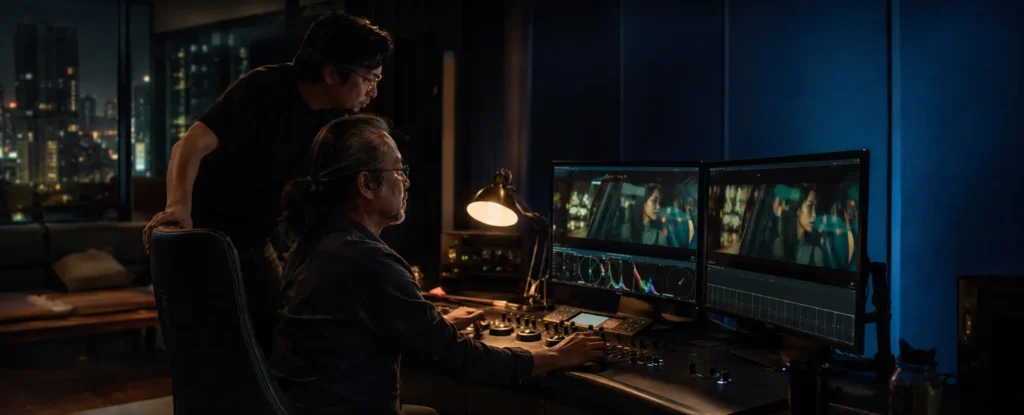
Picture finishing — DI, conform, colour grading, deliverables mastering, QC, and HDR pass — sits in the same category. For productions where the shoot has wrapped elsewhere and only the finishing remains, the Thailand post-production rebate can apply to that finishing-only scope. Several international productions now route the finishing pass through Bangkok specifically to capture the rebate while maintaining the creative team’s connection to the colourist and supervisor through remote review sessions.
Qualifying spend: what counts toward the Thailand post-production rebate
The Thailand post-production rebate is calculated on qualifying Thai spend, which is generally understood as payments to Thai vendors, Thai entities, and Thai-resident crew, properly invoiced, paid through the Thai banking system, and supported by tax-compliant documentation. For animation, VFX, and post work, qualifying spend typically includes vendor fees, artist labour billed through the Thai vendor, equipment and facility rental, render and storage costs, software licences expensed by the Thai vendor, audio facility costs, and supervisory time billed through Thai entities.
Spend that does not count toward the Thailand post-production rebate generally includes payments routed offshore, fees paid to non-Thai entities, expenses that the auditor cannot trace through Thai-vendor invoicing, and costs that fall outside the categories TFO has published as eligible. The simpler the contracting structure, the cleaner the audit — and the higher the share of the foreign production’s actual spend that converts into a rebate cheque.
How the Thailand post-production rebate is applied for
Applications for the Thailand post-production rebate go through the Thailand Film Office, the regulator inside the Department of Tourism. The headline steps are recognisable to any producer who has filed for a cash rebate in another jurisdiction: pre-approval before the work starts, evidence-gathering through the work, an audited claim after the work completes, and a rebate disbursement after the TFO and the auditors sign off. The specifics — application timing, document set, audit standard, and disbursement window — are published on the Thailand Film Office website and updated periodically.
Foreign productions cannot file directly; they apply through a TFO-registered Thai production service company, which is the entity that signs the application, owns the audit relationship, and holds the documentation. Choosing the right partner is the single biggest variable in how smoothly the Thailand post-production rebate flows. A partner who understands the post-production scope — not just the live-action workflow — will set up the contracts, the vendor stack, and the spend tracking in a way the audit accepts the first time.
Why a Bangkok production partner matters for the rebate
The mechanics of the Thailand post-production rebate are straightforward on paper and intricate in practice. Audit-grade documentation, vendor diligence, Thai tax compliance, scope changes mid-project, and the timing of disbursement all sit inside the relationship between the foreign production and the TFO-registered Thai service company. A partner that has filed multiple rebate applications, knows the auditors, and has the post-production vendor network on speed dial will compress the timeline and protect the claim from the rejections that catch first-time foreign filers.
Overgrown Productions is a Bangkok-based, TFO-registered production service company that handles end-to-end production for international clients — including the contracting, spend tracking, and documentation that supports a Thailand post-production rebate claim. Our work spans feature films, episodic, documentary, and commercial production for Netflix, Vice, Al Jazeera, the United Nations, Reuters, Universal, and Warner Music, with bilingual English-Thai crews and structured workflows built for international standards. For producers thinking about co-production structures alongside the rebate, our Thailand co-production guide for international producers covers the related framework.
Realistic timelines for the Thailand post-production rebate
From a production planning perspective, the Thailand post-production rebate works best when it is built into the budget from the start. Pre-approval, contracting, and vendor selection should happen before any Thai work begins. Spend tracking should run from the first invoice. The audit is faster when the documentation is clean — meaning the foreign production should plan for a few months of post-work-finished-to-rebate-disbursement, not weeks, and should never count the rebate cash as available before the disbursement actually lands. Treat the rebate as a recoverable on the balance sheet, not as a cash-flow input on the schedule.
For productions where Thai work permits, withholding tax on foreign crew, or visa arrangements are part of the picture, see our Thailand film permit guide for the related compliance framework that runs alongside the rebate.
Thailand post-production rebate frequently asked questions
Can a foreign production claim the Thailand post-production rebate without shooting in Thailand?
Yes. The rebate is calculated on qualifying Thai spend, not on whether the camera rolled in Thailand. A production that contracts a Thai animation, VFX, or post-production vendor under the rebate’s documentation requirements can claim on that Thai spend even if principal photography happens elsewhere. The portability of post-production work is one of the reasons the Thailand post-production rebate has gained traction with international producers.
What kinds of animation work qualify?
Animation work performed by Thai studios — modelling, rigging, layout, animation, lighting, rendering, compositing, and finishing — generally qualifies, provided it is contracted through a TFO-registered structure and the spend is properly documented. 2D and 3D pipelines, animated features, and animated episodic series can all be structured to capture the Thailand post-production rebate.
Are VFX vendor fees eligible?
Vendor fees, artist labour billed through the Thai vendor, equipment and facility costs, render and storage, software licences expensed by the Thai vendor, and supervisory time billed through Thai entities are generally eligible. Payments routed offshore or to non-Thai entities are not.
How long does it take to receive the rebate?
Realistic planning is months from work-complete to disbursement, not weeks. The application sequence is pre-approval, evidence-gathering during the work, audit-grade documentation, audited claim after completion, and disbursement after TFO and the auditors sign off. The cleaner the documentation, the shorter the cycle.
More questions about Thailand Post-Production Rebate
Can a foreign production apply for the Thailand post-production rebate directly?
No. Applications go through a TFO-registered Thai production service company. The Thai partner signs the application, holds the audit relationship, and owns the documentation. Choosing the right partner is the single biggest variable in how smoothly the rebate flows.
Does audio post and finishing qualify?
Yes. Sound design, dialogue editorial, ADR, foley, scoring sessions, mixing, audio finishing, DI, conform, colour grading, deliverables mastering, and QC performed in Thai facilities all sit inside the eligible-work envelope for the Thailand post-production rebate.
How is qualifying spend defined?
Qualifying spend is generally payments to Thai vendors, Thai entities, and Thai-resident crew, properly invoiced, paid through the Thai banking system, and supported by tax-compliant documentation. The specifics — categories, caps, and exclusions — are published by TFO and updated from time to time; verify with the regulator or a TFO-registered service company before locking the budget.
Plan your Thailand post-production rebate with a Bangkok production partner
For international producers pricing animation, VFX, audio post, or finishing against rival Asian and European hubs, the Thailand post-production rebate is one of the inputs that determines whether the budget closes. The mechanics are workable, the vendor ecosystem is mature, and the structuring sits inside the relationship with the TFO-registered Thai service company you appoint. To talk through whether a specific scope qualifies, how to structure the contracting, and what to expect on timeline and documentation, reach the Overgrown Productions team in Bangkok at info@overgrownproductions.com.